Nausea & Vomiting in Pregnancy: What's Actually Happening — and How to Find Relief
Understanding morning sickness through both a clinical and a Chinese Medicine lens
You're growing a human being, and your body is letting you know.
For many women, nausea is the first real sign that something extraordinary is happening. It often arrives before the bump shows, before the world knows, sometimes before you've fully taken it in yourself. And it is — let's be honest — deeply unglamorous.
It's also incredibly common, genuinely miserable, and in both Western medicine and Chinese Medicine, understood as a sign that pregnancy is progressing. That doesn't make it easier to live through. But it does mean your body is doing something right.
The short answer: Nausea and vomiting in pregnancy (NVP) affects up to 80% of women, is driven primarily by rising pregnancy hormones, and — for most women — eases by weeks 13–16. There are evidence-based strategies that genuinely help, and you don't have to just push through it.
So let's talk about what's actually going on, and what might help.
It's Called "Morning Sickness" — But Only 17% of Women Get It Just in the Morning
Nausea and vomiting affect somewhere between 70–80% of pregnant women. Around half will also experience vomiting. And despite what the name suggests, it can arrive at any time of day — morning, afternoon, evening, or a lovely combination of all three.
Symptoms tend to begin around week 6, peak somewhere between weeks 9 and 10, and ease off by weeks 13–16 for most women. Some carry it longer. A small number — around 1–3% — develop a more severe form called Hyperemesis Gravidarum (HG), which is a separate conversation and one we'll get to below.
So, Why Does It Happen?
From a Western perspective, nausea in early pregnancy is mainly driven by rising levels of hCG — the hormone produced by the developing placenta. It's not a coincidence that hCG peaks at around 9–10 weeks, right when nausea is often at its worst.
Oestrogen and progesterone also play a role — progesterone slows gastric motility (essentially, it slows everything down digestively), and heightened sensitivity in the brainstem's vomiting centre means that smells, tastes, and sensations that never bothered you before can suddenly send you running for the bathroom. Low blood sugar, fatigue, and, in some cases, an underlying H. pylori infection can all pile on top of each other.
More recent research has identified the placental hormone GDF15 as a likely major contributor to nausea and vomiting in pregnancy — particularly in more severe cases such as hyperemesis gravidarum (HG). Emerging evidence suggests that some women may be more sensitive to the rapid rise in GDF15 during pregnancy, possibly due to differences in pre-pregnancy exposure and genetic susceptibility. While this area of research is still evolving, it offers an important biological explanation for why some women experience far more severe symptoms than others. (Fejzo et al., 2019)
If you're carrying multiples, have a history of HG or motion sickness, or have pre-existing thyroid or digestive conditions, you may find symptoms hit harder. [(Nelson-Piercy et al., 2024, BJOG)]
What Chinese Medicine Makes of It
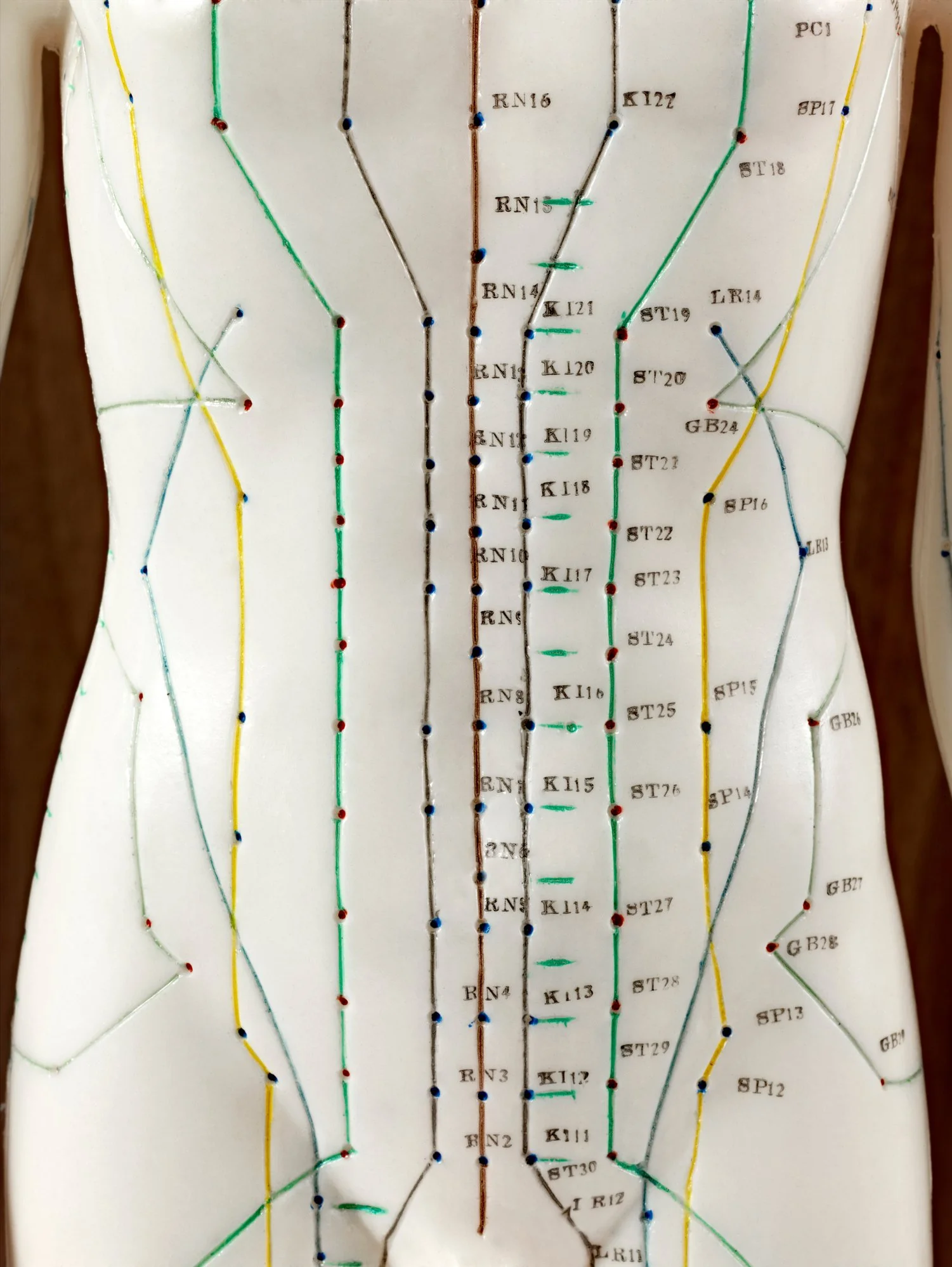
In TCM, nausea in pregnancy is understood as rebellious Stomach Qi — the Stomach's energy, which normally descends to support digestion, starts moving upward instead. The nausea is, quite literally, things going the wrong way.
Here's the bit I find genuinely fascinating: in Chinese Medicine, there's a vessel called the Chong Mai — the Penetrating Vessel — that connects the uterus and the Stomach. This is why, in TCM, it makes complete sense that the profound upheaval of early pregnancy lands so directly in the digestive system. The two are linked.
In early pregnancy, Qi, Blood, and Essence are redirected inward to nourish the new life forming. This puts real pressure on the Spleen and Stomach — our Earth element, our digestive fire. Is there enough heat to transform food? Is the Qi strong enough to move things along? When the answer is temporarily no, nausea follows.
It can be worsened by emotional stress, irregular eating, exhaustion, and chronic worry — all of which disrupt the smooth downward flow of Stomach energy. There can also be Liver involvement if you're finding nausea worse with stress, or if irritability and emotional tension are part of the picture.
None of this is a failure. It is the body completely reorganising itself around something new.
A Note on Hyperemesis Gravidarum
HG is not morning sickness turned up to eleven. It is a distinct medical condition, and it matters that we name it correctly.
The diagnostic picture includes weight loss of 5% or more of pre-pregnancy body weight, significant dehydration with ketones in the urine, and electrolyte disturbances. It typically begins between weeks 4 and 6, and — unlike typical NVP — can persist for the entire pregnancy.
If you are losing weight, unable to keep fluids down for 24 hours or more, barely urinating, or feeling faint and weak, please contact your midwife or GP promptly. This isn't something to push through, and early intervention makes a significant difference. [(Nelson-Piercy et al., 2024, BJOG)]
What Actually Helps
Eat Small and Often — Even When You Don't Want To
An empty stomach is often the most reliable trigger for nausea. Eating a small amount every 1–2 hours — even just a few mouthfuls — helps stabilise blood sugar and takes the edge off. Keep a snack beside the bed and nibble before you even think about getting up.
In TCM terms, this keeps the Spleen and Stomach gently resourced without overwhelming them. A full stomach is just as problematic as an empty one.
Warm, Simple, Baby-Soft Foods
Both naturopathic and Chinese Medicine thinking point in the same direction here: warm, cooked, easy-to-digest foods. Soups, broths, congee, mashed potatoes, stewed fruits, oats, plain crackers, eggs. Not glamorous, but gentle on a digestive system that's already under pressure.
Cold and raw foods take more energy to process — and right now, your digestive energy is stretched. Save the salads for the second trimester.
Sour and salty tastes can also be surprisingly settling — lemon water, miso, umeboshi plum, a pinch of salt on avocado. Keep a lemon nearby and inhale when smells hit.
Always include a bit of protein — eggs, yoghurt, nuts, cheese, tofu — to keep blood sugar from dropping between meals.
Sip, Don't Gulp
Hydration is really important, but drinking too much at once can make nausea worse. Small, frequent sips throughout the day — warm water with lemon, ginger tea, peppermint tea, miso broth, coconut water — are far easier to manage than a big glass of water.
If you've been vomiting, a simple homemade rehydration drink can help: 1 litre of water, 1–2 tablespoons of honey, ¼ teaspoon of salt, ¼ teaspoon of bicarbonate of soda. Sip it throughout the day.
Separate your fluids from your food where possible — try to sip about 30 minutes after eating rather than with meals.
Ginger — and Yes, It Actually Works
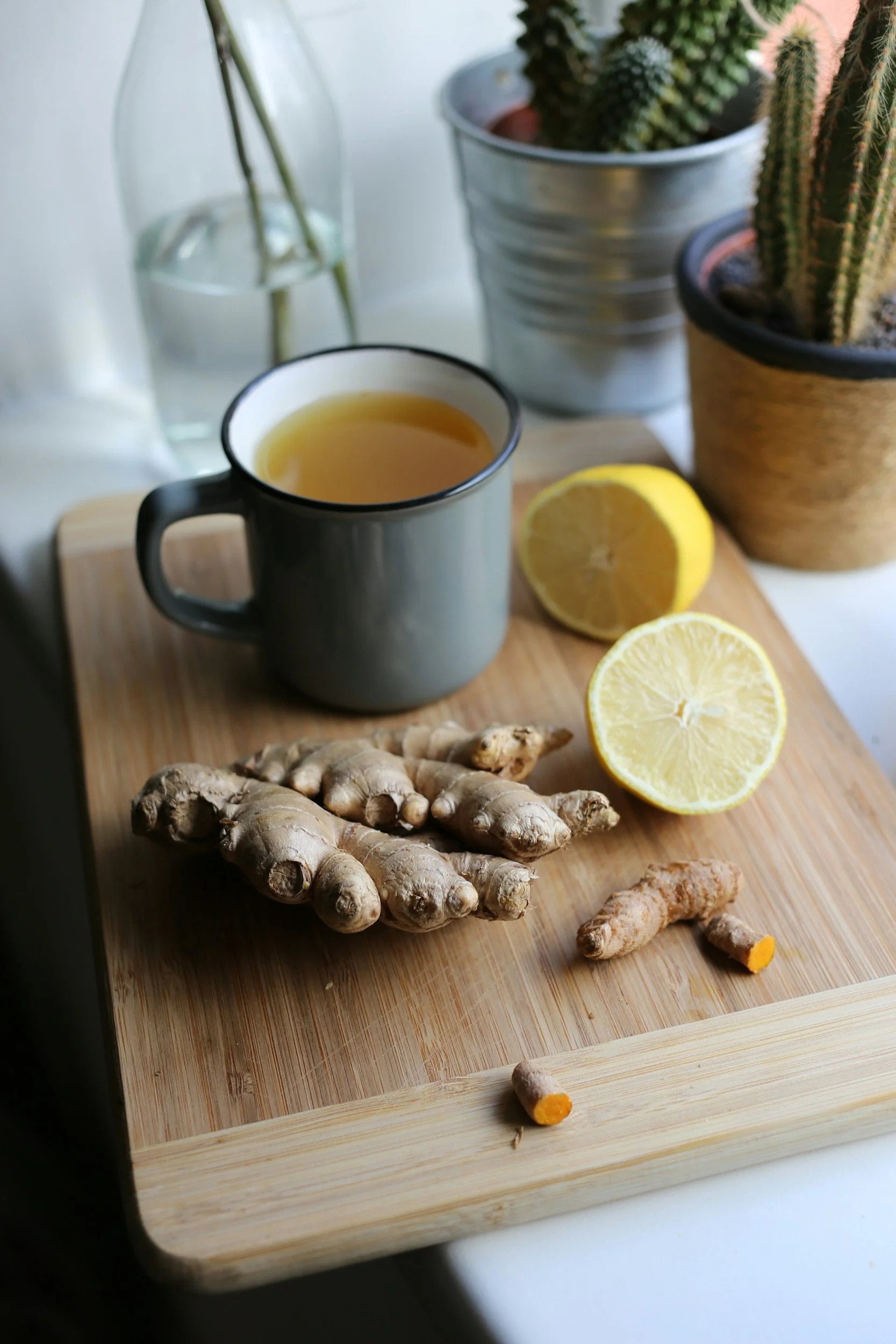
Ginger is one of the most consistently studied natural interventions for NVP. A 2023 systematic review and meta-analysis of 33 RCTs found that ginger had significantly better effects than placebo for reducing nausea scores and comparable antiemetic effects to conventional medicine, with a good safety profile. [(Tan et al., 2023, Frontiers in Public Health)]
Around 1g per day is the effective amount — that's roughly one teaspoon of freshly grated ginger, four cups of ginger tea, or two pieces of crystallised ginger. (Ginger ale only counts if it's made with real ginger — most commercial varieties aren't.)
Vitamin B6
Vitamin B6 (pyridoxine) has solid evidence behind it for NVP, and in Australia forms part of the first-line pharmacological approach — combined with doxylamine — for more significant symptoms. A 2023 systematic review and meta-analysis confirmed that pyridoxine supplementation, alone and in combination, significantly improves nausea scores in pregnancy. [(Jayawardena et al., 2023, Archives of Gynecology and Obstetrics)]
Worth checking whether your prenatal multivitamin already contains a meaningful amount of B6 before adding extra supplementation.
A Word on Your Supplements
It's worth revisiting your prenatal routine with your practitioner in the first trimester. Iron and zinc supplementation can worsen nausea in some women — temporarily pausing these (with clinical guidance) may help. Taking your prenatal later in the day with food rather than first thing in the morning can also make a difference.
If constipation is in the mix too — and it often is alongside nausea — that's worth addressing separately, because sluggish bowels reliably worsen nausea. Magnesium glycinate, Epsom salt baths, fibre and hydration all play a role there.
Acupressure at PC6
PC6 (Nei Guan) sits on the inner wrist, about three finger-widths up from the wrist crease between the two tendons. It is the most researched acupuncture point for nausea, and the good news is that it works beautifully as acupressure you can do yourself at home.
Sea-Bands apply pressure directly to this point. A 2023 RCT found acupressure wristbands reduced nausea and vomiting scores in pregnant women, and the broader evidence suggests benefit — though study quality varies and more large-scale trials are still needed. [(Yılmaz et al., 2023, Journal of Acupuncture and Meridian Studies)] It is safe, low-cost, and worth trying. Press firmly for 1–2 minutes, breathe slowly, and use it as often as you need.
When Smells Are the Problem
Smell sensitivity is one of the most disruptive and least talked-about features of NVP. A few things that genuinely help:
Pierce a few holes in a lemon or lime and keep it nearby — inhale when other smells hit
Ask others to cook, or make sure the kitchen is well-ventilated before you go in
Simmer lemon and cinnamon on the stove before cooking to shift the kitchen smell
Diffuse lemon, peppermint, or vanilla to keep the air at home manageable
Switch to children's or unflavoured toothpaste if brushing triggers gagging
Rest — Properly, and Without the Guilt
This one keeps coming up because it keeps being true.
In TCM, the Spleen and Stomach are already doing extra work. Fatigue is the body's signal that it's redirecting resources inward — toward implantation, placental development, the foundational work of those early weeks. Pushing through doesn't make you stronger; it often makes nausea worse.
9–10 hours of sleep, naps when you can get them, saying no to things that don't need to happen — these aren't luxuries. They are appropriate, sensible responses to what your body is currently doing.
Does Morning Sickness Affect Your Mental Health Too?
Nausea and vomiting in pregnancy don't just affect the body. It affects your work, relationships, ability to care for other children, and sense of self. It can feel isolating — especially in those early weeks when you're not telling many people yet, and you're just quietly suffering through it.
Anxiety and low mood are common companions to NVP, especially when it's prolonged. And there's something worth naming here: the first trimester is also the beginning of matrescence — the profound identity shift of becoming a mother. You may be navigating excitement, grief, ambivalence, and exhaustion all at once, while feeling too unwell to process any of it.
Your nervous system is under real load. The hormonal upheaval of early pregnancy directly affects neurotransmitter activity, which is part of why mood, anxiety, and emotional sensitivity can feel so heightened alongside the nausea.
You don't need to minimise this, and you don't need to cope alone. Asking for help with meals, childcare, housework — that is not weakness. It is the most sensible thing you can do right now. And if anxiety or low mood feels significant, talking to your GP or a perinatal counsellor is a worthwhile step.

When to Get Help
Most NVP, while genuinely miserable, is manageable with the strategies above. Please contact your midwife, GP, or hospital if:
You can't keep any fluids down for more than 24 hours
You're urinating very little, or not at all, in a day
You feel faint, weak, or dizzy when you stand up
You notice significant weight loss
There is blood in your vomit
You have abdominal pain, fever, or cramping
You experience neurological symptoms — visual changes, confusion, tingling in the hands or feet
These signs may indicate HG or another condition that requires prompt medical review. Please don't sit on them.
The Short Version
Morning sickness is common and usually temporary; your body is not broken. It is working incredibly hard.
Eat small and often. Sip throughout the day. Rest without guilt. Try ginger, B6, and acupressure at PC6. Choose warm and gentle over perfect. And if it's severe — ask for help, because that's what help is for.
"Eat what you can, when you can, and let nourishment come gently back in its own time."
This blog is for educational purposes and is not a substitute for personalised clinical advice. Always consult your healthcare provider if you have concerns about your symptoms.
If you're looking for integrative, evidence-informed support for nausea and vomiting in pregnancy — including acupuncture, naturopathic nutrition, and personalised first-trimester care — we'd love to support you at Sage Nest—clinics in Rankin Park & Warners Bay.